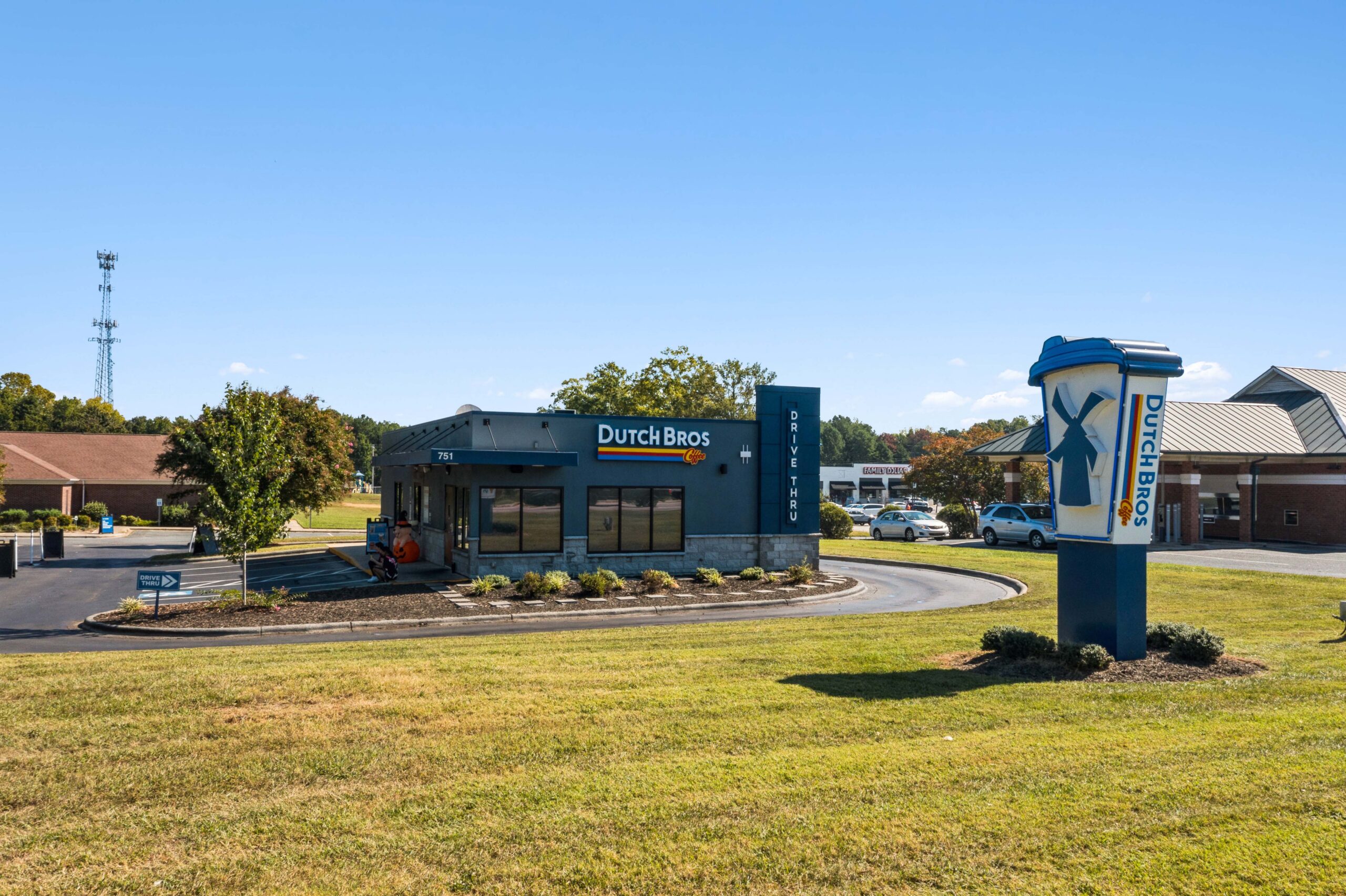
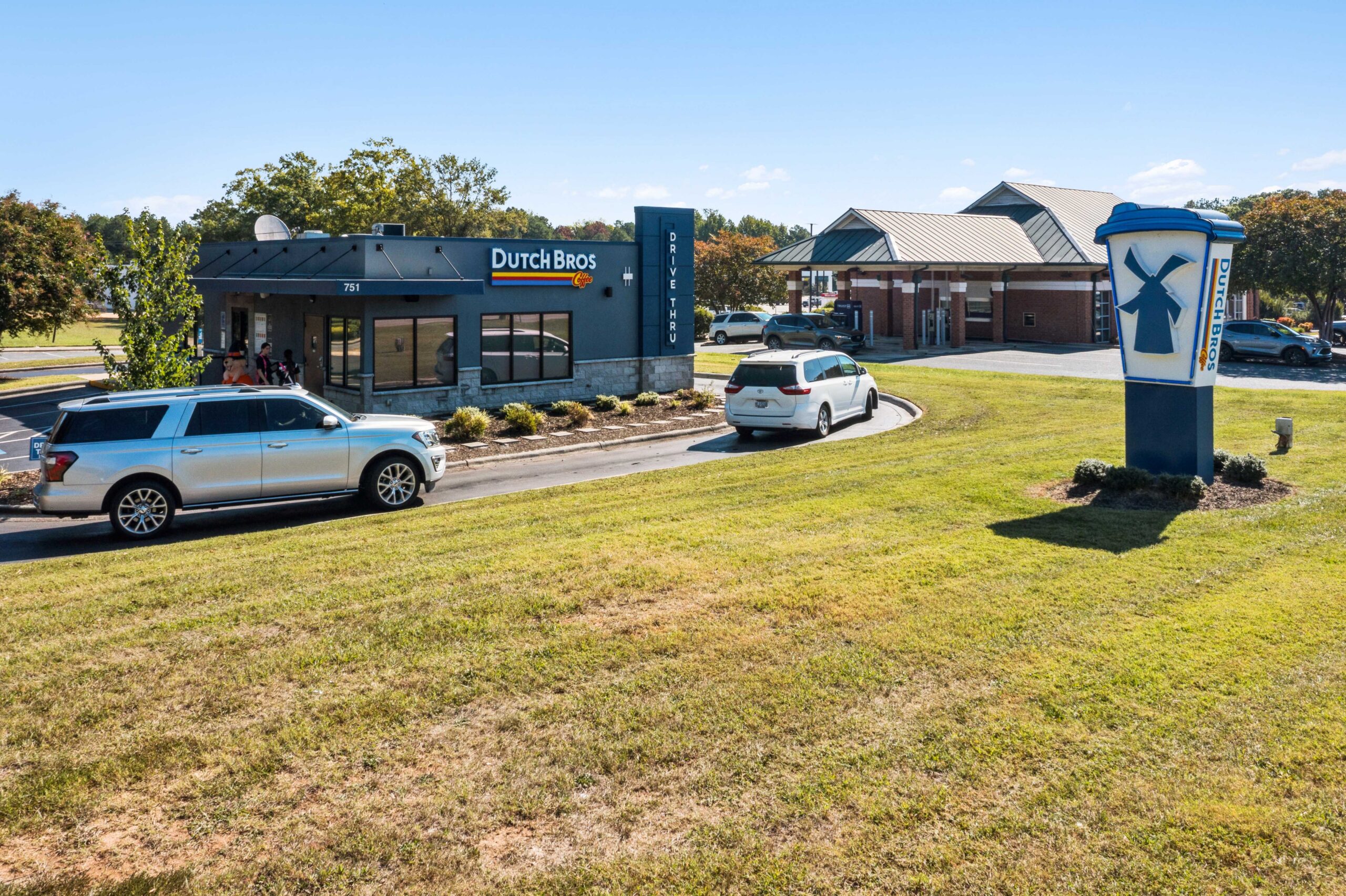
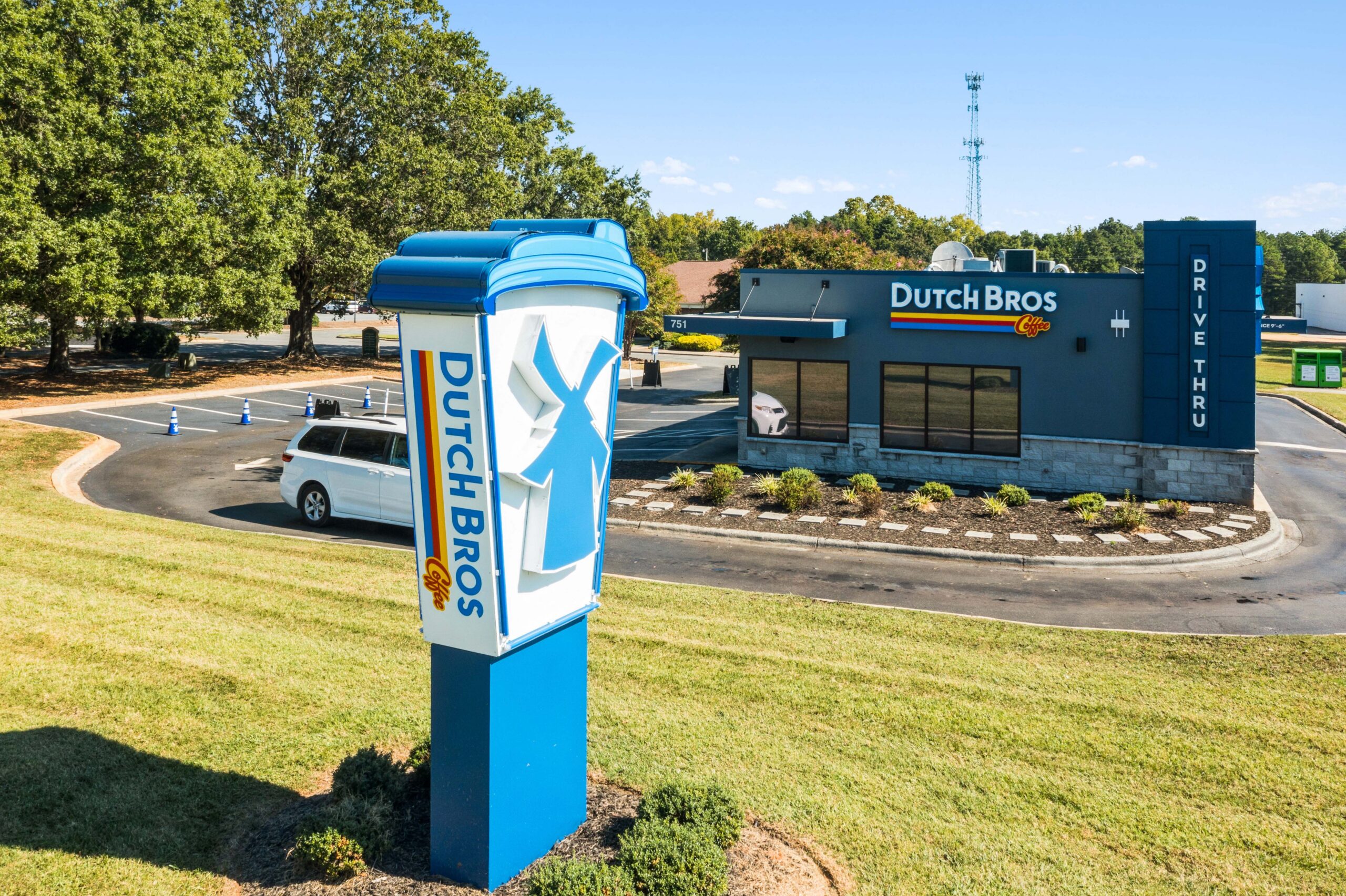
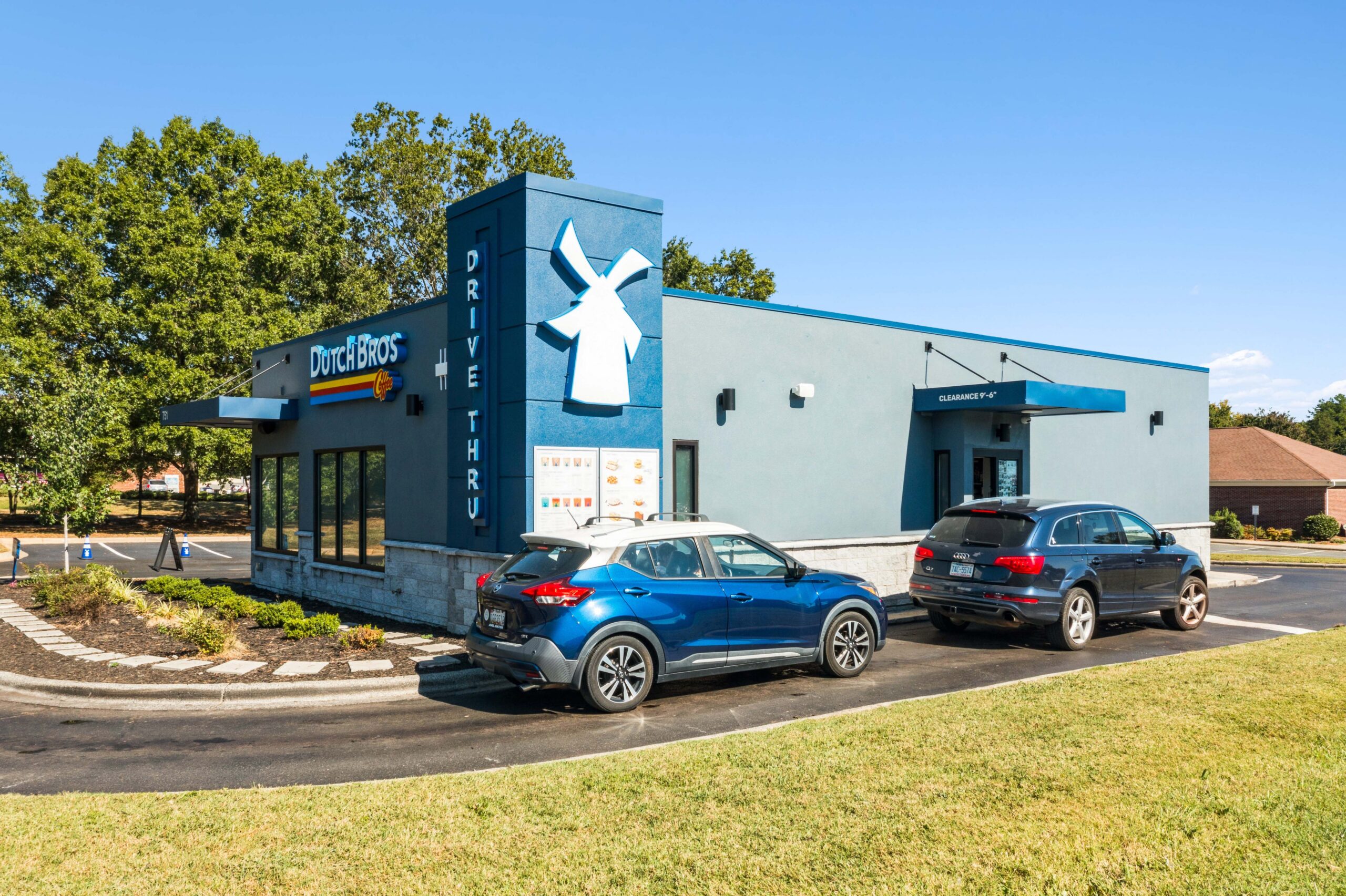
Publicly Traded (NYSE: BROS) | $1.50B+ in 2025 Revenue
– Dutch Bros was founded in 1992 by brothers Dane and Travis Boersma as a single espresso pushcart in Grants Pass, Oregon.
– Dutch Bros is currently one of the fastest-growing chains, expanding its footprint by nearly 30% in 2025 alone and targeting a national goal of 7,000 stores.
– Dutch Bros has rapidly climbed to become the third-largest coffee chain in the U.S. by location count.
Dutch Bros Acquires Clutch Coffee Bar, Accelerating Expansion
– Dutch Bros has acquired North Carolina-based 20-unit chain Clutch Coffee Bar, with plans to rebrand all locations in the Carolinas to Dutch Bros by early 2026.
– The 20 existing Clutch Coffee locations will be rebranded to Dutch Bros to expand their presence in North and South Carolina.
13+ Years Remaining | Absolute NNN Lease
– Dutch Bros assumed the prior Clutch Coffee lease which has 13+ years remaining on an original 15-year lease.
– The lease has no landlord responsibilities and offers 2.00% annual increases throughout the base term.
– In addition to the 15-year base lease term, the tenant has one, ten-year option and two, five-year options to renew with the same rent increase structure annually.
Directly Across from Atrium Health Union Hospital, a Major Regional Healthcare Destination
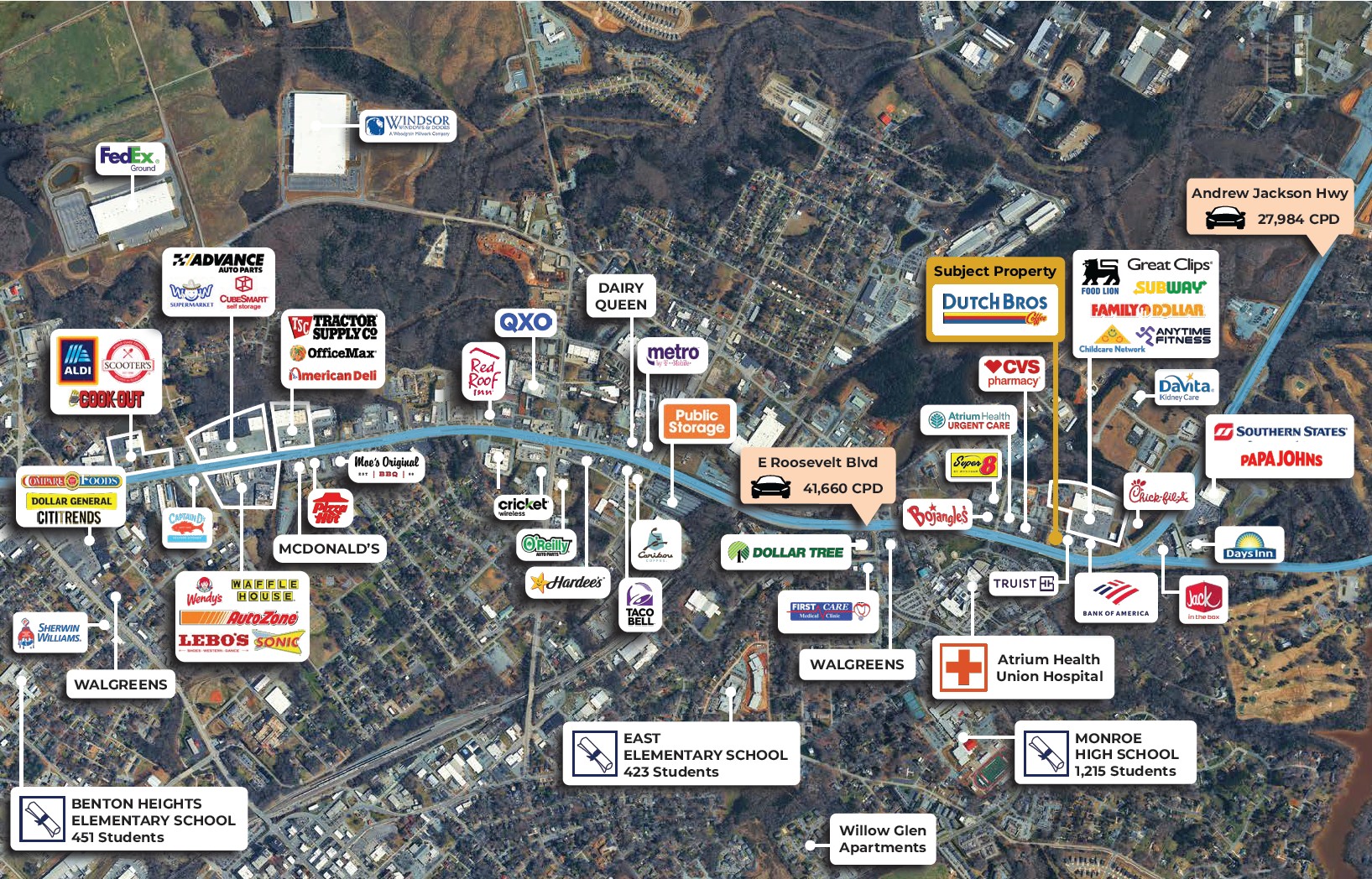
– The property is strategically positioned directly across E. Roosevelt Boulevard from Atrium Health Union Hospital, a major healthcare destination that serves as one of Union County’s primary medical facilities.
– Healthcare campuses are among the most durable economic drivers within a trade area, supporting surrounding commercial real estate through stable employment and recurring daily visitation patterns.
Strategic Food Lion Grocery-Anchored Outparcel
– The property is positioned as a highly visible outparcel to a Food Lion-anchored shopping center, benefiting from consistent daily consumer traffic generated by one of the Southeast’s most established grocery brands.
– Grocery-anchored retail centers are widely regarded as among the most resilient retail formats due to their necessity-based customer visits and recurring shopping patterns.